
"More Bird," Mama
A conversation with Ari Friedman on motherhood, noticing, and the art of looking up

“More bird” says my son, “Mama, more bird”
He pleads as though I have control
“Mama, more bird” says Ari Friedman’s son. And who can blame him? I want more bird, too!
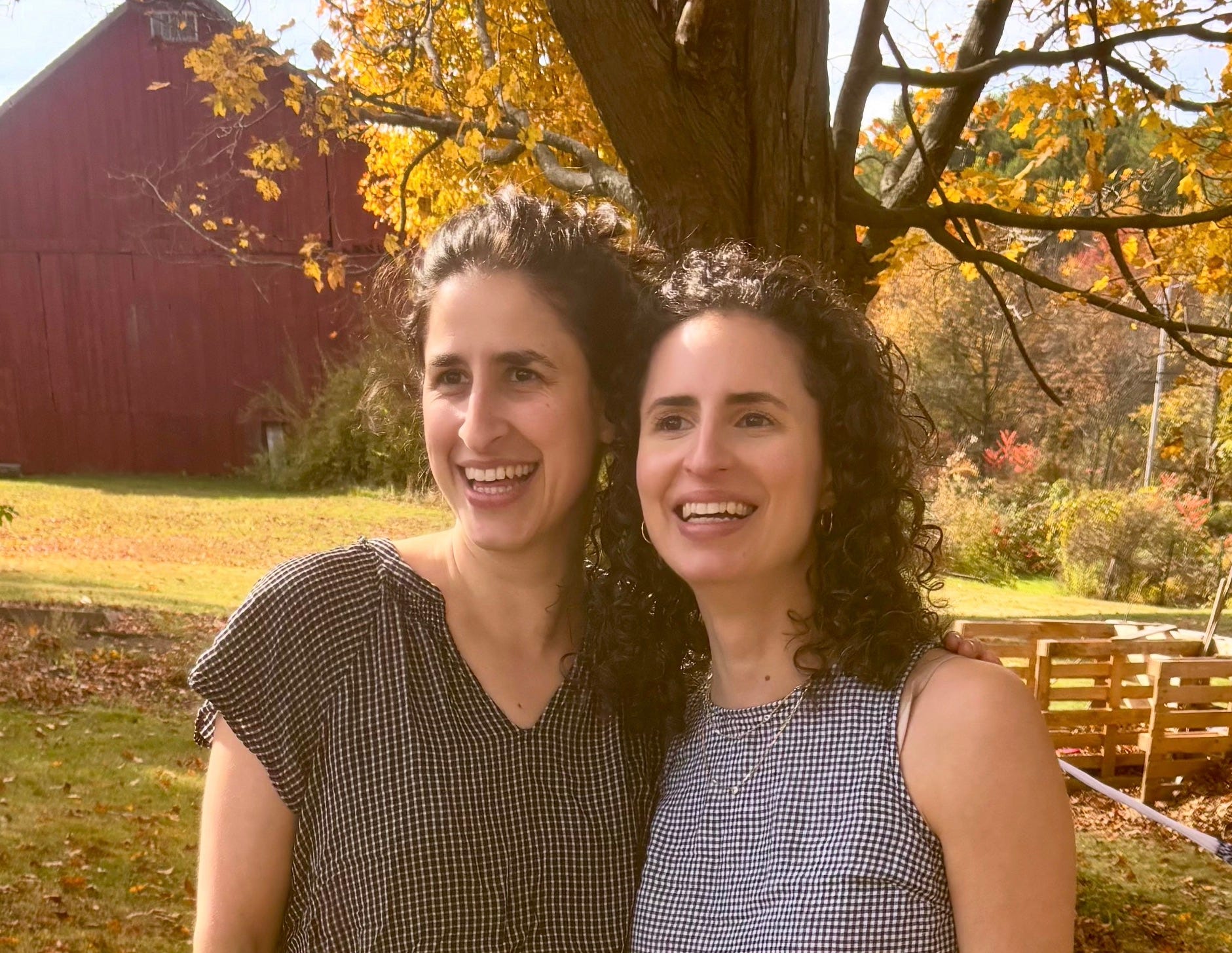
Ari captures moments like this and puts it into song—together with her sister Mia—on their new album Learning Your Name. It’s a delightful collection about noticing, parenting, love, creativity, and the divine. So, in today’s newsletter, I interview Ari about the project and combining motherhood with her creative life. Enjoy!
CASPER TER KUILE: Ari, congratulations on the new album! It’s a beautiful collection of songs that have a thread of care-giving sewn throughout. Tell us more about it—what drew you to this theme? How did the songs come together?
ARI FRIEDMAN: The last time Mia and I recorded an album, I was five months pregnant with my first child. Two years later, Mia had a kid, and not long after that, I had another. The pandemic hit early in that timeline and we had all this time to stare in wonder (and sometimes frustration) at these small beings. Being with little kids all day runs the emotional gamut from extreme boredom to profound meaning and connection—and we were both eager to capture those moments in the best way we know how: through songwriting and poetry.
Once we decided to record an album, it was clear that all of our new material was about parenting. With six original songs on this theme, we added a song that our dad wrote for our older sister, Shoshana, when she was two (before either of us were born) which was sung routinely in our childhood household. The song, called Little One, sits in the perspective and imagination of a young child. And the final tune on the album is a folk song Mia and I have loved for many years called Foreign Lander. It is originally about a man going overseas to war and missing his love back home. For years, though, I’ve been singing it to my kids as a lullaby. In the first verse we simply change “dearest jewel” to “dearest child” which upends the meaning from a song about romantic love to one of familial love: “I’ve conquered all my enemies on land and on the sea, but you, my dearest child, your beauty has conquered me.”
CASPER: What I love so much in your writing is the specific moments with your kids that you share. (The birds in the first track, the squirrel in the tree, the act of looking up as oatmeal falls on the floor...)
Can you talk about your experience of parenting and of being an artist, and how you’ve developed this capacity to notice?
ARI: One of the biggest surprises upon becoming a mother was how having a baby both shrunk and widened my world. The minutiae of my day to day were centered completely on this small human in sacrifice of my career and pre-kid social life, yet as he grew, I got to be privy to his discovery of the world: everything from his first taste of food, to his first sunset out the window of an airplane, to his first perception of the stars and the moon.
CASPER: Wow. I can’t even remember my own first sunset on a plane!
ARI: Right? So being a mother informs my artistry and being an artist informs my mothering. I’m interested in how my children occupy this expansive mindset to which us adults have largely lost access. I’m interested in seeing my children as portals to a perspective I haven’t had since my own childhood. I’m interested in making up songs to get them out the door in the morning and mining my own creativity for solutions to conflicts of both the parent-kid and sibling variety. To be clear, I am not always able to access rainbows of creative genius; sometimes there is yelling. But the magic in the world my children inhabit continues to take my breath away. And as a creative person, I can’t not write about it.
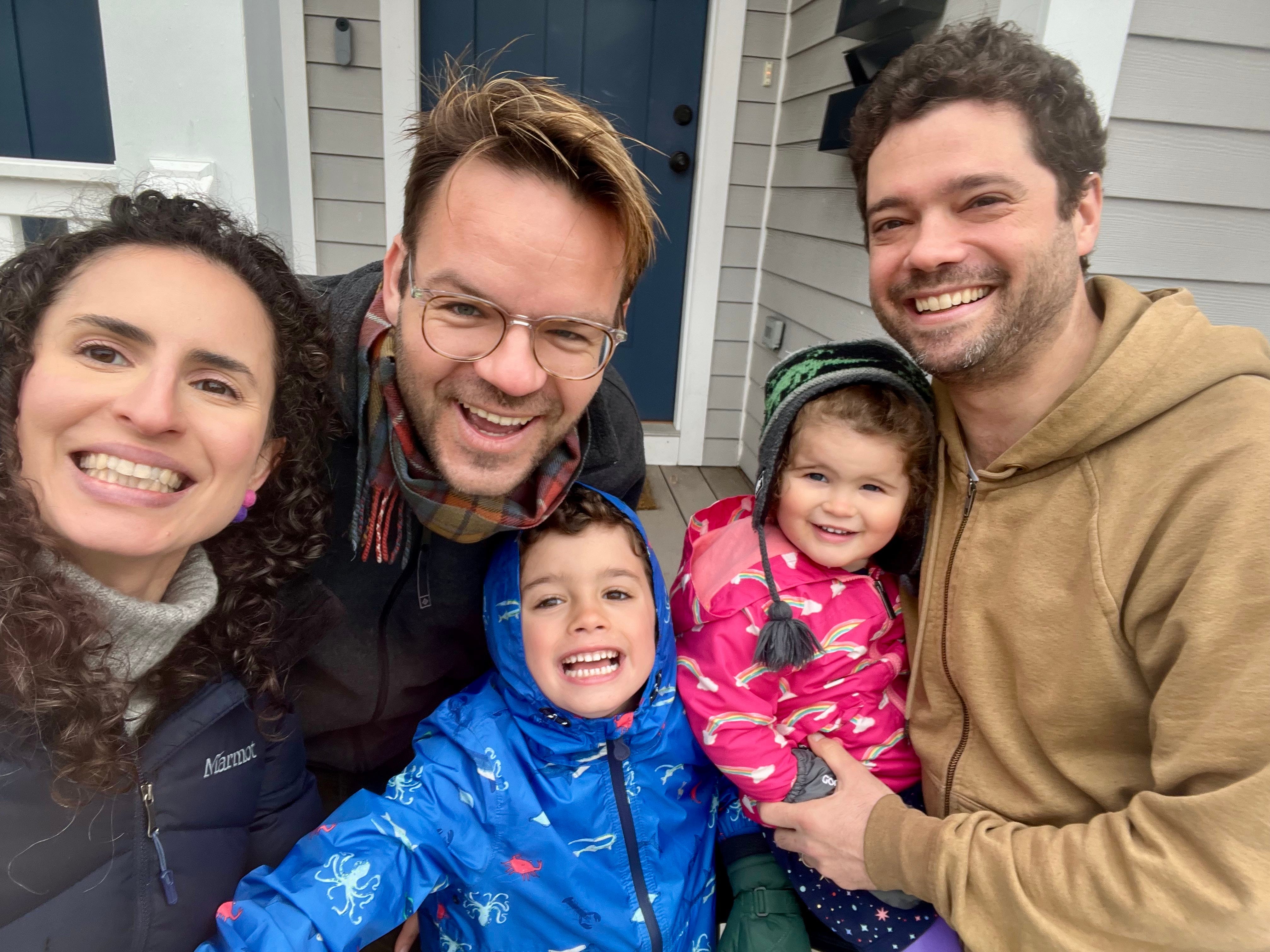
CASPER: Some eight years ago, before Sean and I moved to NYC, we dreamed up the potential of living together in a shared household somehow—the millennial duplex dream! Alas, it was not to be. But you’ve kept that vision of a wider family and communities of care. How have they been part of this creative project?
ARI: I love this question and wish we could’ve made our duplex dreams come true! Though I’ll say that right now, we have an incredible family living in the condo above ours; our children have become best friends and it is probably as close to the dream as we’ll get until, inevitably, one of us moves out for more space. But I digress…
After the album was recorded, we turned to questions of how to make it more than just an album. Rather than being music only streamed in the background, could it have a deeper purpose? Could it serve as a way to gather people? We performed three album release concerts this spring and at each of these we included a prompt—“When I look up from the busyness of my life, I notice…”—and read responses from the stage in between songs.
CASPER: Oh I love that! It’s so cool to think of a gig as a deeper gathering opportunity.
ARI: And you may connect that prompt to our song (based on a poem I wrote) called “Look Up” and it made each event feel more collaborative. Through this project, I also started a Substack about the intersection of parenting and creativity through which I aim to cultivate a community of caregiving creatives.
CASPER: One of the things I’ve been thiking about is how artists have the capacity to speak with a moral voice into the public square. What do you want us listeners to hear in this beautiful collection? What are you calling us to?
ARI: It’s a cliché to say, but we’re all looking down a lot: at our screens, our kitchen counters, our to-do lists. This collection is asking all of us to look up, or out, to listen. Do you ever eavesdrop on your kid playing make-believe with her dolls while you’re doing dishes? Do you put your phone away when you go on a walk? Do you lie on your backyard trampoline with your kids pointing out shapes in the clouds and the tops of the budding tees? There is so much we can notice. Ross Gay calls them delights. Maggie Smith calls them beauty emergencies. I’m calling them moments of poetry. It is not easy to notice them given the distractions and anxiety of this historical moment, yet they are there, strung throughout our day if only we remember to look up.
CASPER: Beautiful.
Final question: I asked you to write a song for one of the sections of my book, The Power of Ritual, when it came out in 2020, and I was SO delighted that the song is on this new album. Can you tell us about it?
ARI: I loved this commission! I chose to write about the last section of your book, Transcendence, which, I like to joke, is not a large topic or anything. So I narrowed it down, of course, to the transcendence of child-rearing. With the lyric topic chosen, I wanted the melody to have something to do with transcendence as well: as an admirer of the American modernist composer Charles Ives, I chose to quote a melodic line from his piece for solo piano, The Concord Sonata. Each movement in this piece is named after a pioneer of the Transcendentalist movement and I chose a musical quote from the third movement—The Alcotts—on which to base the opening melody of my song, Illuminated.
CASPER: Thanks so much Ari :) And congratulations again on the album!